
Helsinki Collegium for Advanced Studies
Finland

Religious diversification in contemporary society raises new theoretical and practical questions about individual religiosity, religion-state relations, and, particularly, the relations of minority religions with society and the state, as well as with other religious communities (Kirkham 2013, Fox 2015, Sarkissian 2016, Chryssides 2018). This research project aims to theoretically conceptualize and empirically ground the social construction of concepts and attitudes toward religious diversity, i.e., existing religious beliefs and practices in contemporary Lithuania at the societal, organizational, and individual levels. By applying triangulation methodology – analysis of literature and archival documents on the religion and state relations, interviews with the members of minority religions conducted in 2014 and 2021 about the place of minority religions in Lithuanian society and their relations with the state, as well as participant observation in the field since 2010 this study will show how minority religions negotiate their place in the society by counteracting the remains of soviet anti-religious propaganda, hegemony of Roman Catholic Church and banal Catholicism (Griera et al. 2021).
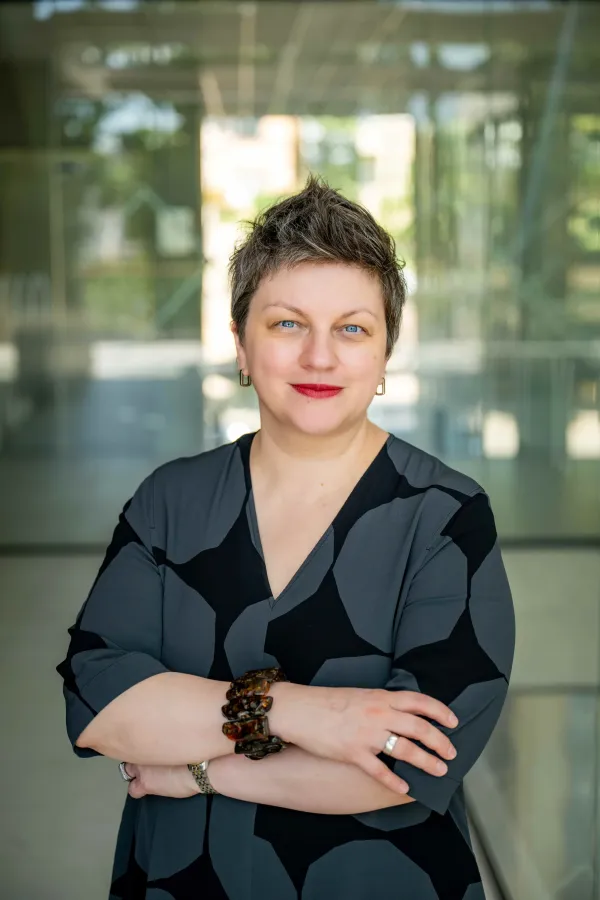
Dr. Milda Ališauskienė is a Professor of Sociology at Vytautas Magnus University, Lithuania. Her research areas include religious diversity, religion and state, and gender and religion in post-socialist societies. In 2023, she published the monograph “Minority Religions, Society and State in Contemporary Lithuania” (in Lithuanian). In 2021-2023, she led the international research project „Religion and Gender Equality: Baltic and Nordic Developments”. In 2021-2025, she chaired COST Action 20107, “Connecting Theory and Practical Issues of Migration and Religious Diversity.” Currently, she leads the national research project “Discursive Practices of Politicization of Religion and Religionization of Politics in Contemporary Lithuania” (RELPOL) and the Lithuanian research team in the HERA/Chanse project, “Religious Realignments and Democratic Resilience – A Comparative Study of Religious Responses to (geo)political Crises”.