A worldwide network
UBIAS stands for “University-Based Institutes for Advanced Study”. The UBIAS network was initiated in 2010, when representatives from 32 research institutes worldwide met at the conference entitled "University-Based Institutes for Advanced Study in a Global Perspective: Promises, Challenges, New Frontiers," hosted by the Freiburg Institute of Advanced Studies, Germany. The founding of the first UBIAS dates back almost 60 years. However, the last two decades have seen an upsurge in the establishment of such institutes across the globe – a trend that continues unabated. Unlike traditional Institutes for Advanced Study, UBIAS institutes are embedded within or associated with a university, and actively contribute to the international academic culture and to the major scientific achievements of their home university.
Connecting Researchers Across The Globe
By offering various fellowship programs on different academic levels (junior and senior researchers), UBIAS institutes bring together outstanding researchers from different disciplines, nationalities and academic backgrounds, creating a productive environment for innovative research. These common characteristics have proved to be a fruitful basis for mutual exchange, although the individual institutes display a large variety of different concepts and academic pursuits. With their individual profiles, they answer to the specific needs and strengths of their affiliate university. While many institutes have traditionally concentrated on humanities and social sciences, an increasing number of institutes now incorporate theoretical and experimental sciences.
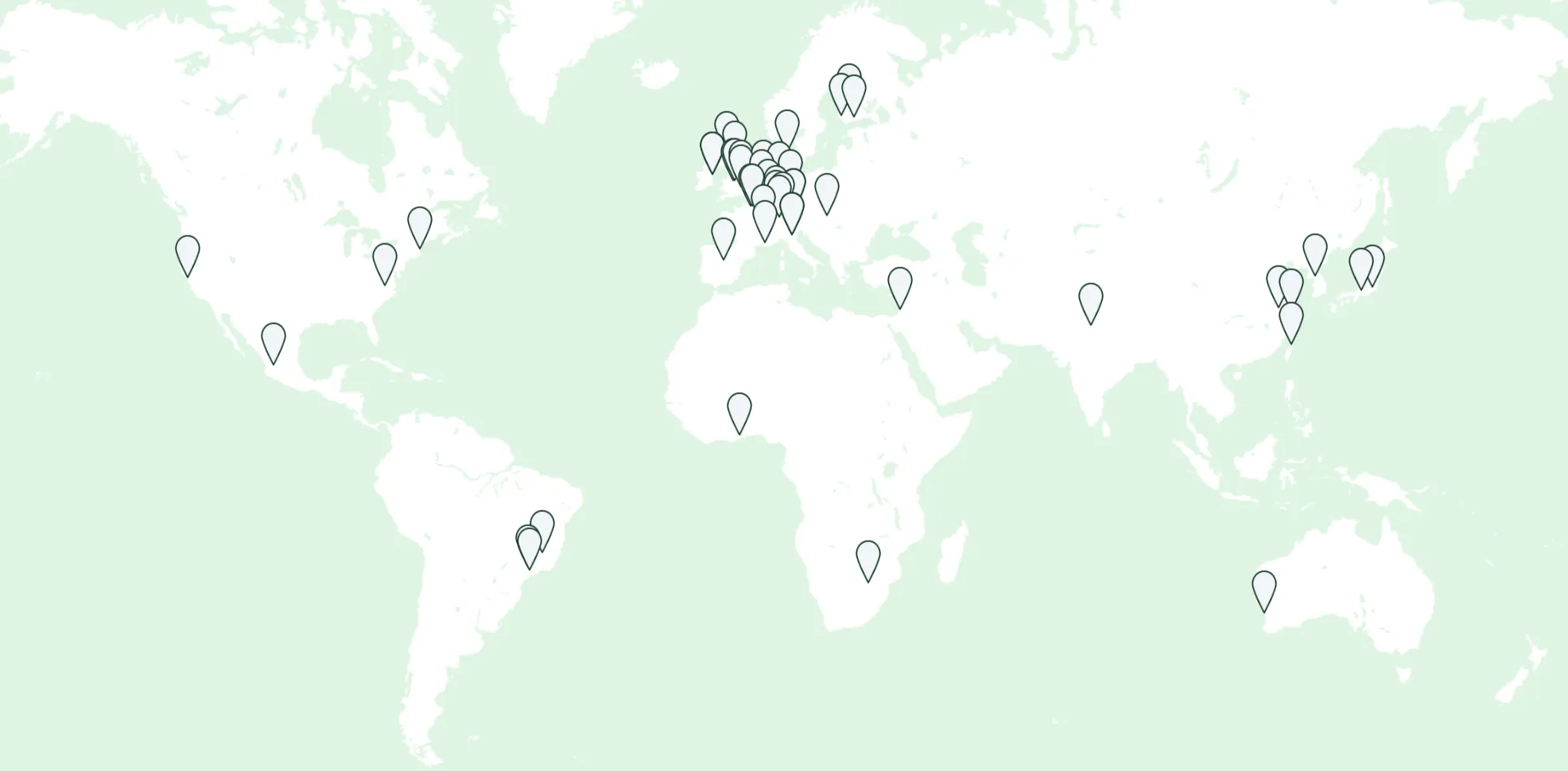
49 Members: Diversity On A Global Scale
The network, that currently comprises 49 member institutes worldwide, was established to enable informal as we as well structured forms of scientific and institutional exchanges, including biennial conferences and joint programs between partner institutes.
UBIAS is committed to equality, inclusivity and diversity. In the delivery of our mission, we seek to promote ethnic diversity, gender equality, intercultural awareness and respect for difference. We adhere to the ongoing implementation of these policies in our day-to-day activities (for example in committee membership, conference programming, and the selection of members, etc.).
The IAS offer a considerable diversity in terms of fellowship conditions: individual or collective fellowships; invitations or open calls for applications; academic yearlong residencies or shorter periods, blue-sky or theme-based fellowships. Furthermore, scientific policies are characterized by different thematic or geographical orientations, by a varying degree of openness to natural and hard sciences, or by a commitment to promoting early career researchers.
UBIAS shares a common vision concerning the freedom of research, curiosity-driven scholarships, and scientific dialogue across disciplines and intellectual traditions. As small, agile, and adaptive research organizations, UBIAS are at the forefront of innovative research and of advanced study. Individueally and collectively, we represent a valuable addition to the local, national and multilateral institutions of higher education and research.